
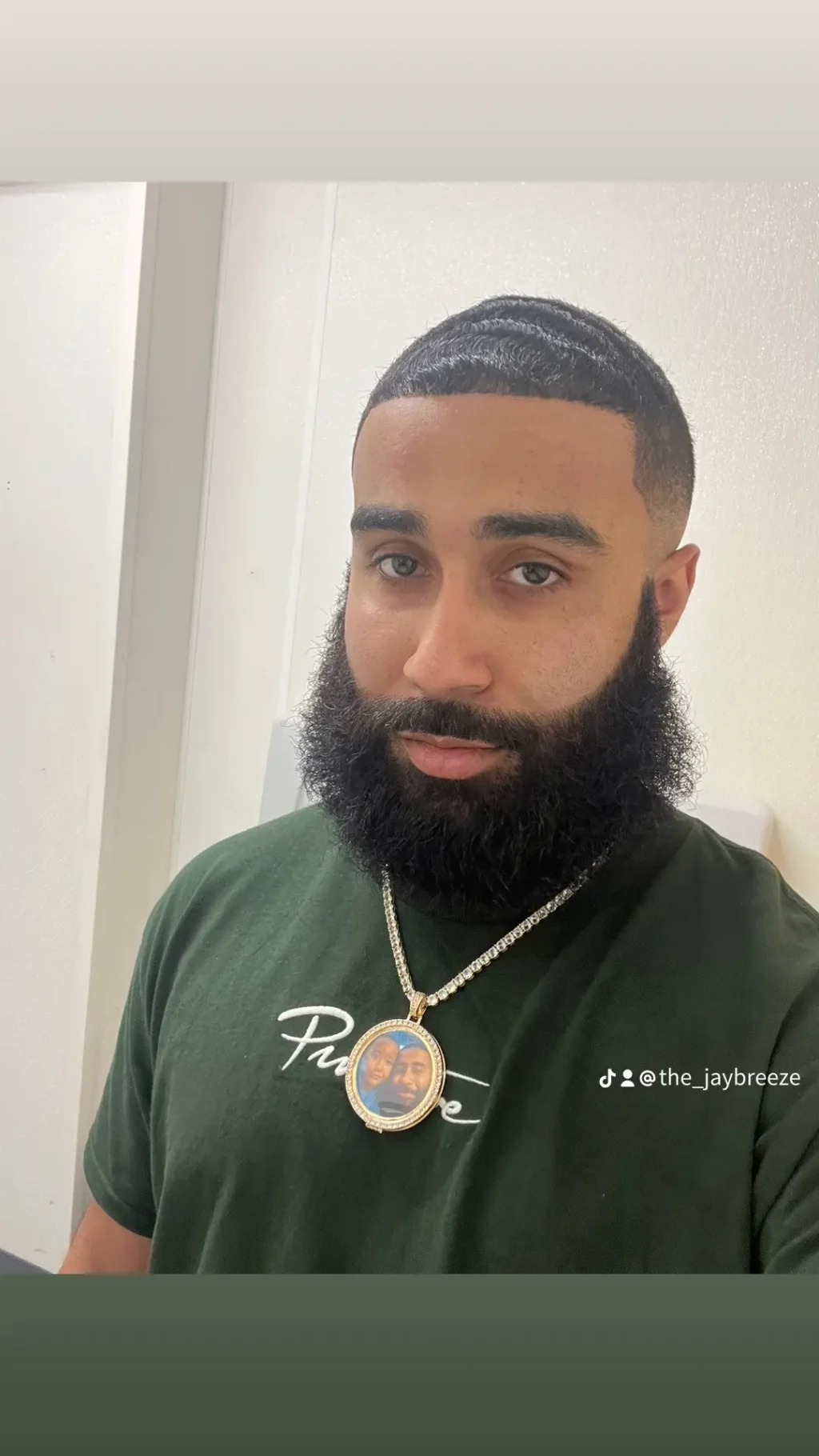
JayBreeze on Musical Versatility, Authenticity, and His Upcoming Project House of Dolls
In this exclusive interview, Rosita from the Globalhiphops team sits down with Staten Island-born, Georgia-based rapper and producer JayBreeze to discuss his musical beginnings, creative process, hip-hop influences, and upcoming project, House of Dolls.
Background & Beginnings
Rosita: You started rapping around 15 and even posted your early work on MySpace. What do you remember about those first attempts, and what kept you going after people told you to take them down?
JayBreeze: Not gonna lie, I remember feeling a little defeated. But I didn’t want to stop or give up. I knew I needed to improve, and I had to face the reality of the situation.
Rosita: Was there a specific moment when you went from thinking, “I like making music,” to “I actually want to be an artist”?
JayBreeze: I don’t know if I’ve ever actually had that moment. I never really started making music with the intention of becoming an artist. I just made music because I wanted to be heard. I never really thought I could profit from it or have everybody like it. I thought maybe one or two people would connect with it.
Rosita: You grew up in Staten Island but are now based in Georgia. How have those two places shaped you differently as an artist and as a person?
JayBreeze: Growing up in New York was a lot different from growing up in Georgia. As a teenager, I spent a lot of time going back and forth between the North and the South. I used to visit my aunt in North Carolina during the summers and sometimes over the holidays. We also had some family out here, so we’d occasionally come down.
I think that definitely made me more versatile. I heard more music and broadened my horizons. Growing up in the North, we knew about artists like Gucci Mane and OutKast, but they weren’t necessarily played everywhere. OutKast had a really good run, of course, but I don’t remember Gucci being on the radio much until songs like “Lemonade” or “Freaky Gurl” started getting attention.
Rosita: You’ve mentioned listening to music with your father from a young age. What did those early music experiences teach you about what music can mean to people?
JayBreeze: I remember days when we’d get in the car and play whatever hot record was out at the time. This was back when the bootleg man was around, so you’d go to the store, the barbershop, or somewhere else to get the latest bootleg tape.
Whoever was hot on the radio, that’s what we’d listen to. The energy when the music came on was what I always liked about those moments. It’s not something you can really recreate.
Rosita: Looking back at the teenager who first started rapping, what would you tell him now?
JayBreeze: Just keep going. Sh*t is gonna happen, and people are gonna hate. It’s always better to get it off your chest than keep it inside.

Sound & Creative Process
Rosita: One thing that stands out about your music is how different you can sound from one song to another. Where does that versatility come from?
JayBreeze: I’ve been to a lot of places and worked with a lot of different artists from different backgrounds. At one point, I tried to step away from rapping and focus more on producing, so I spent a lot of time making beats.
When I made beats, I’d often think, “This sounds like a so-and-so type beat.” Now, when I make something, regardless of the genre, I might hear the first line as an artist and immediately jump into writing. Sometimes it just comes naturally.
Other times, I struggle to find the direction. When that happens, I try to imagine who would sound best on the beat. Once I hear that in my head, I can start to understand the direction I want to take. Then I put my own spin on it and bring my perspective into the music.
I think you should try to be who you are, but you can always express yourself in different ways. It’s kind of like language. Konnichiwa is still a way of saying hello.
Rosita: You said that when you hear a beat, your first thought is often, “Who do I think would sound good on this?” How does thinking like a producer affect the way you approach being a rapper?
JayBreeze: I swear it’s a blessing and a curse. Sometimes it helps me think outside the box and create something amazing. But sometimes I get too caught up in trying to make something sound like a particular thing instead of letting the sounds be what they want to be, if that makes sense.
I’m sure some other producers understand what I’m saying. Sometimes doing too much is simply doing too much. Simplicity is bliss, but you also have to remember that you can achieve greatness by being average.
Rosita: Do you normally start with the beat, the lyrics, the concept, or the voice you want to use?
JayBreeze: It just depends on how the process goes. I’d say 75 to 80 percent of the time, I start with a beat. But there have been times when I’ve heard a sample or thought of a line and built the entire song around that.
Rosita: How do you know when you’ve found the right sound or version of yourself for a particular song?
JayBreeze: I’ve faced that challenge a handful of times. I’ll think something sounds good one way, then start hearing it differently, and that can throw everything off.
When that happens, I usually make both songs. Whichever one sounds best is the one I keep. I actually have a whole archive of songs I don’t use or don’t plan to release simply because I created another song with the same material or beat, and it turned out better.
Rosita: Do you see yourself more as a rapper who produces, a producer who raps, or do you deliberately avoid putting yourself into either box?
JayBreeze: I see them as two different entities. JayBreeze raps, while El Brisa produces. We’re one and the same, yet different.
Rosita: What is something you do in the studio that people listening to the finished song would probably never realise?
JayBreeze: I can’t just give away the sauce like that. They’re gonna have to catch that in the behind-the-scenes videos.
Rosita: With influences ranging from Kanye West and Drake to Rakim and Wu-Tang Clan, what have you taken from each generation of hip-hop without simply trying to recreate it?
JayBreeze: Don’t be scared to try new things. If you like something, go get it, put it in the MPC, and chop it up. If that doesn’t work, you can always hook up the ASR. If that fails, you can turn it into a melody and create something brand new.
Don’t be afraid to experiment. Listen to people like Kanye and RZA, who take samples and flip things in ways I never could have imagined. Then you have Rakim, whose lyrics are crazy.
With Drake, I really enjoy watching him create. One of my favourite behind-the-scenes videos is of him in the studio when they’re working on a song. You can see that energy when they’re making records, and it’s like they’re saying, “I had hit records on my demo.” That energy is real. You can feel it through the screen.

Music & Projects
Rosita: You’ve released projects including Para El Padre, Pain, and World-class. Looking across your catalogue, how do you think your music has changed?
JayBreeze: It sucks because I feel like I’m my own biggest critic. When I listen to my music, I’m paying attention to the bars, melodies, chord creations, and my ability to flip things. I overanalyse everything.
I’m listening to the sound while also remembering everything that went into creating the track and all the problems I had to overcome to get it there. I’ll think, “Okay, this mix bus sounded better,” or, “How come this vocal sounds cleaner?”
Back then, I didn’t have all the equipment and tools I have now. I struggled with that on one of my tapes. I can’t remember which one, but I felt like I was progressing so much, and then one day I listened to it in the car and thought, “Man, this sounds so bad. What was I thinking?”
It reminds me of when Kanye went through that process with “Stronger” and had to work with Timbaland to get it right. That’s when I started going into studios, learning about hardware, and focusing more on processing the audio waveforms instead of smothering everything with a million different plugins.
Rosita: Is there one project or song in your catalogue that feels the most personally important to you?
JayBreeze: All of my music is me talking to myself, but I leave hidden things in there. Sometimes I put things backwards or include little messages that I’m telling myself.
Rosita: House of Dolls is your upcoming project. What can listeners expect from it that they may not have heard from you before?
JayBreeze: The concept behind House of Dolls actually came from a funny conversation.
A while back, I was trying to work with a DJ who made it pretty clear that he didn’t want to collaborate with me. I was baffled by it. I remember thinking, “Damn, my music sucks really bad, huh?”
Moving forward, I continued doing a little work with him, although nothing like the full project I originally wanted to make. Eventually, I put together around 10 tracks and sent them to him. He didn’t like a single one. He said they were all trash.
Trying to save face, I sent him a couple more tracks, including some that I personally thought were terrible. Then he texted me back saying he liked the one I hated the most.
I was sitting there reading the message, trying to figure out what to do next. So I decided to use that song as a model and create more songs in that direction, hoping to get his approval.
A lot of the songs are club records, stripper songs, and tracks for women who want to turn up. It’s gritty, but it’s definitely music to turn up to. We’re going to get back to those cool flows, too. I just wanted to give everybody something they could have a good time with.
Rosita: If someone has never heard JayBreeze before, which three songs would you give them and why?
JayBreeze: I’d have to start with “Faceless” because it has a vibe to it. After that, I’d give them “Bop.” Again, it’s a vibe, and it’s something everybody can feel and really bop their head to. And probably “Billy.” Those are all solid songs.
Rosita: What does It Takes a Village mean to you, and why do you think that album represents where you are creatively right now?
JayBreeze: Life is hard, man. It’s really hard when you have to do everything on your own. It takes a village. Even in my own upbringing, it took so many hands coming together to create the man I am today.
The album also has a mixture of old and new songs. Some of them were actually created back in 2011 or 2012. It’s that old hopefulness mixed with a wiser understanding of reality.
The Person Behind the Music
Rosita: You described your music as therapy, saying that when you can’t talk to anyone else, you can talk to the mic. What have you been able to express through music that you couldn’t express in a normal conversation?
JayBreeze: It’s actually a blessing to be underground because not many people want to listen to you, so you can pretty much say whatever you want and get things off your chest.
About 98 percent of the time, I’m talking to myself anyway. It’s a reminder to chill and understand that everything is going to be okay. But like I said, some of my music has hidden messages in it. You just have to find them.
Rosita: You said, “Life sucks and we all have a story. It’s not about dwelling on the shortcomings.” What experiences taught you that mindset?
JayBreeze: In life, you’re not always going to win. You’re going to take a lot of Ls before you get a win. You just have to know that the W is coming, and it doesn’t matter what shortcomings you have.
If you work hard, you can achieve your goals. I’m not saying it’s easy. Nothing in life worth having is ever going to be easy, but that doesn’t mean you shouldn’t work hard for it. Don’t be afraid to put in the effort.
Rosita: How much of JayBreeze the audience hears is the real you, and how much is a character or a different side of you that only comes out through music?
JayBreeze: It’s all me. What I’ll say is that it might not be the version of me I am today, but I’ve never liked rapping about things I haven’t experienced or been through.
I’d say I’m more tactical and smarter with my moves now, but we all still have those youthful urges.
Rosita: You’ve said you’re not trying too hard to be different and that “I’m just me.” In an industry where artists are constantly building an image, why is authenticity important to you?
JayBreeze: Because one day somebody is going to run down on you and check your temperature. I’ve seen it happen too many times, and it’s not worth it.
Career & Future
Rosita: You’ve spent years developing your sound rather than chasing a particular trend. What would success actually look like for JayBreeze?
JayBreeze: I already have it. I’ve got a place to lay my head and my family. Everything is good, and the bills are paid. I’m blessed.
Rosita: Are there any artists you haven’t worked with yet who you feel would bring out a completely different side of you?
JayBreeze: I really want to work with some producers. My dream producers would probably include 40, Mike WiLL Made-It, Ear Drummers, Kanye, RZA, Arab Beats, and Hitmaka. The list goes on, but I’m always open to collaboration.
Rosita: If you could take your music anywhere over the next few years, what do you want JayBreeze to be known for?
JayBreeze: I’d just be happy to see everyone vibing to my music. No hate, just cool entertainment and an environment where everyone can enjoy themselves.
Rosita: Finally, if someone discovers your music through this interview, what do you want them to understand about you before they press play?
JayBreeze: First, go follow me on Instagram at @Breeze_the_Hollow_. And thank you for listening. New music is on the way, and if you really f*ck with it, share it with everyone. If you feel it, just know I feel it too.

More Stories
CeaseBeats Expands Its Sonic Universe: Parallel Dimensions and the Vision for 2027
Who Is JayBreeze? Staten Island Rapper Building His Own Sound
Lucky Elisio: The Green Gangster Bringing Abstract Energy and a Message of Love to Hip-Hop